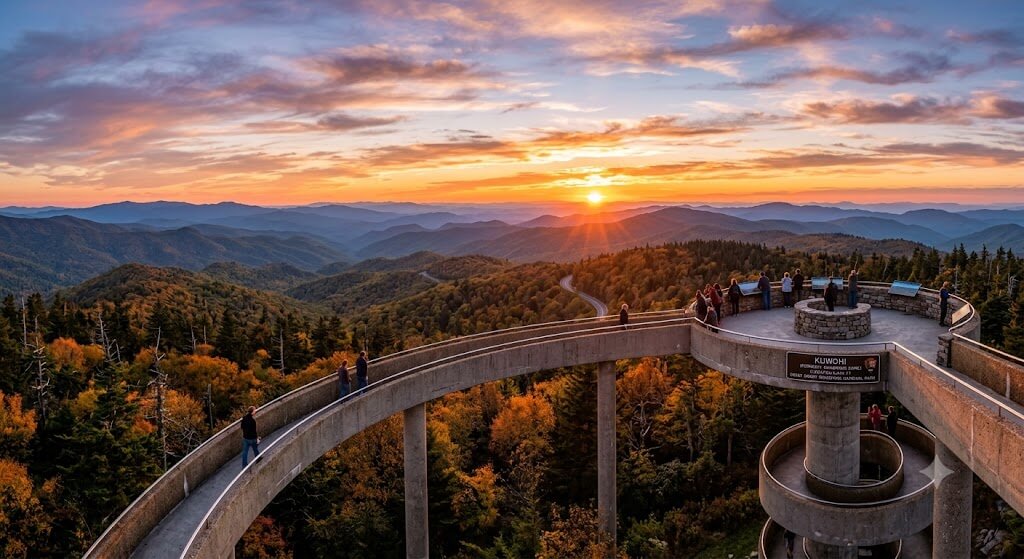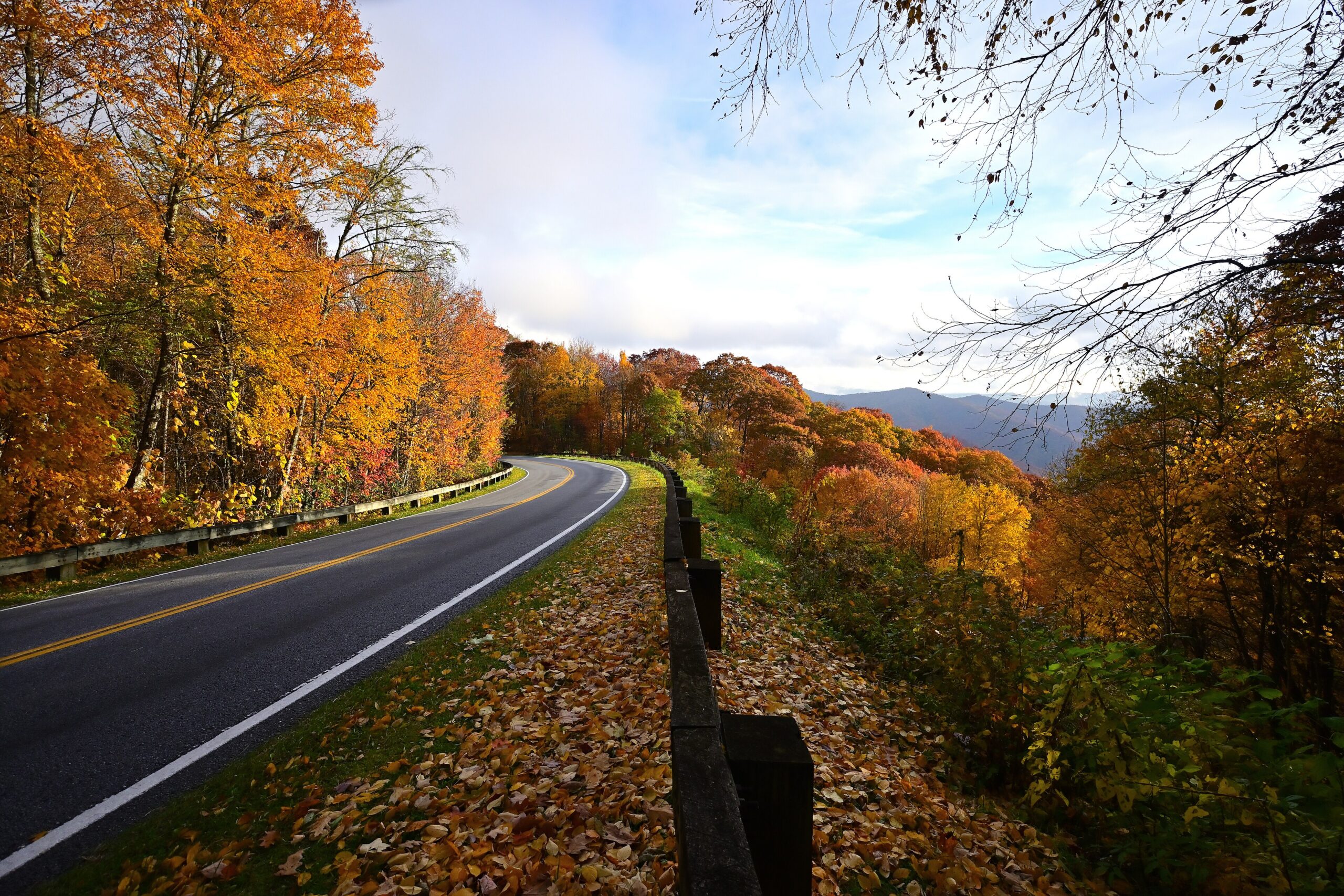
Fall is the Smokies at their most colorful, and their most crowded. With more than 100 native tree species and a mile of elevation change, the color does not arrive all at once. It rolls down the mountains over several weeks. This guide explains when to come, where to drive and how to enjoy it without spending the day in traffic.
Everything here is based on the National Park Service’s fall color guidance. Exact peak dates change every year with rainfall and temperature, so treat the windows below as typical, not guaranteed.
When Do the Leaves Change in the Smokies?
Elevation is everything. The park runs from about 875 feet to 6,643 feet, and the NPS describes the season as a wave moving downhill:
- Mid-September: the first color appears at the highest elevations, where the climate resembles the northeastern United States. Yellow birch, American beech, mountain maple, hobblebush and pin cherry turn first.
- Early to mid-October: color typically develops above 4,000 feet, framed by dark evergreen spruce-fir forest.
- Mid-October to early November: the most brilliant displays usually come at lower and middle elevations, below 4,000 feet, with sugar maple, scarlet oak, sweetgum, red maple, yellow poplar and hickories.
That means a late-October visitor might find bare trees at the top of Kuwohi and peak color around Cades Cove and the towns, while a visitor in the first week of October finds the reverse. If your dates are fixed, simply drive up or down the mountain to find the color.
Why the Smokies Turn So Many Colors
As days shorten and nights cool, trees stop making green chlorophyll. The yellows and oranges (carotenoids) that were there all along show through, and bright sunny days followed by cool nights help trees produce the reds and purples (anthocyanins). Shrubs and vines join in too: Virginia creeper, blueberry and witch hazel add color at eye level, which is why even a short walk can be as rewarding as a big overlook.
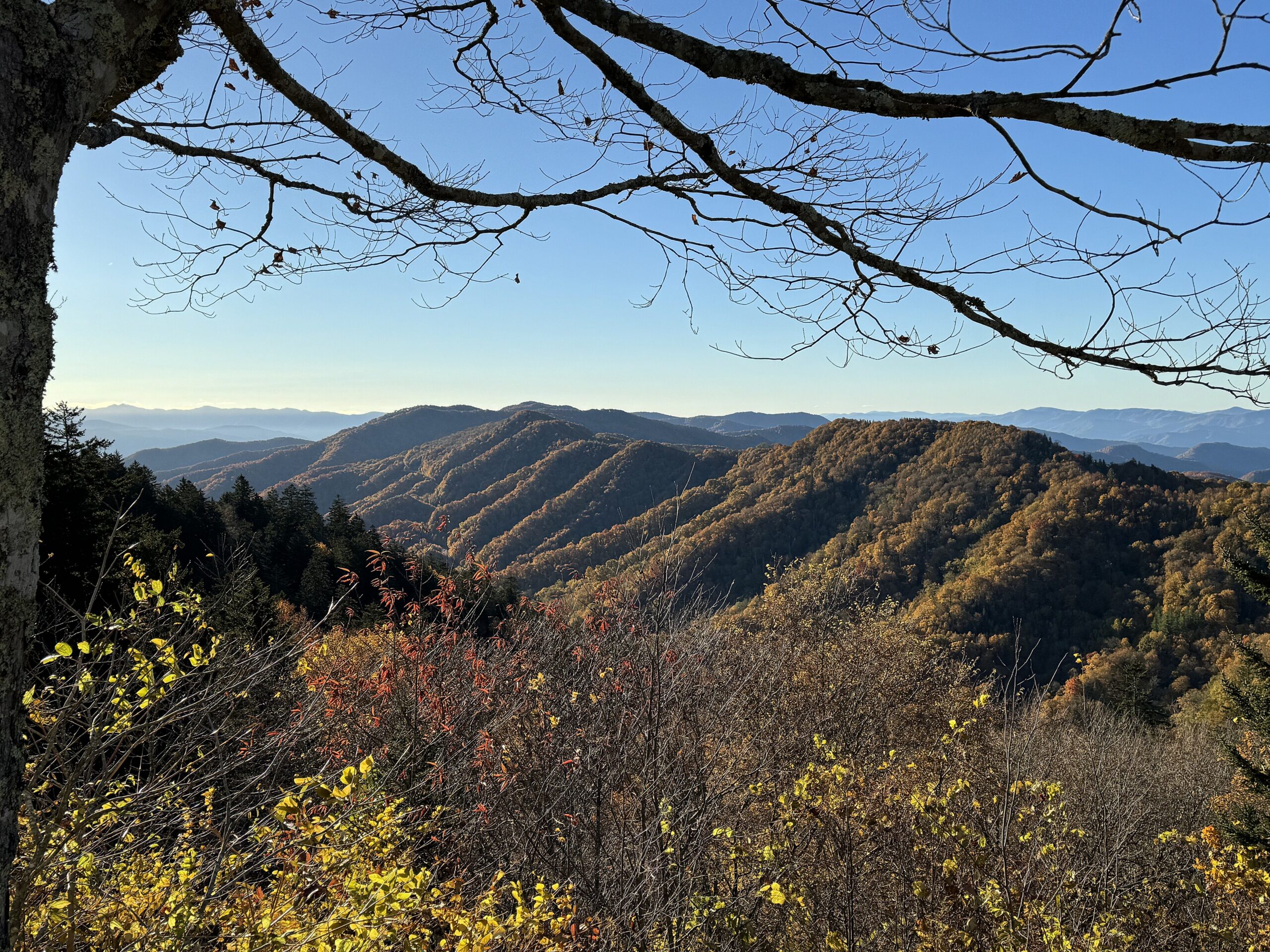
Best Scenic Drives for Fall Color
The NPS points visitors to several drives. Pick the ones that match your timing:
- Newfound Gap Road (US 441): the main route over the mountains, climbing to 5,046 feet. Early October is best near the top.
- Kuwohi Road: high-elevation color in early October. Open through November 29 in 2026, weather permitting.
- Cades Cove Loop Road: an 11-mile, one-way loop through a historic valley. Typically best late October. Expect delays.
- Little River Road and Laurel Creek Road: the river corridor between Sugarlands and Cades Cove is a standout late in the season.
- Roaring Fork Motor Nature Trail: a narrow, one-way drive near Gatlinburg past old homesites and streams. Open through November 29 in 2026; no vehicles over 25 feet.
- Foothills Parkway: just outside the park boundary, with long views and lighter traffic. The NPS suggests Look Rock Tower or the Foothills Parkway as a way to avoid the crowds.
How to Beat October Crowds
October is one of the park’s busiest months, and the NPS says Cades Cove Loop Road and Roaring Fork Motor Nature Trail are consistently the busiest places. A few habits make a big difference:
- Go early or late: the park recommends arriving before 8 a.m. or after 4 p.m.
- Visit midweek: weekend traffic on Newfound Gap and Cades Cove Loop roads is the heaviest.
- Park legally: only park in designated spaces. Parking on road shoulders damages the roadside and adds to congestion.
- Display your tag: Parking tags are required for any vehicle parked in the park for more than 15 minutes: $5 daily, $15 weekly or $40 annual (NPS, 2026). There is no entrance fee.
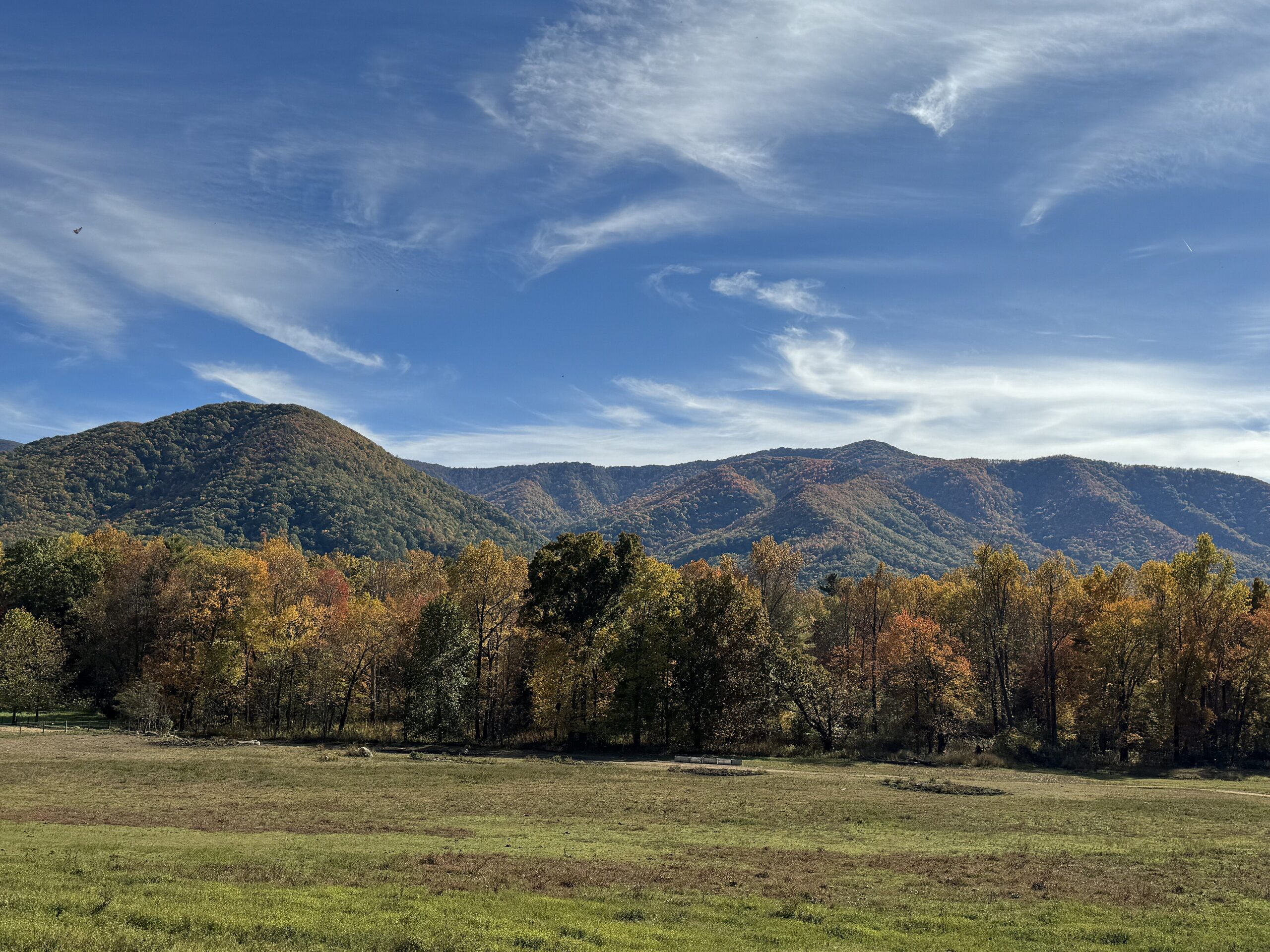
Fall Walks Without a Long Hike
You do not need a strenuous hike to enjoy the color. The trail to the Kuwohi tower is only half a mile, though steep. Around Cades Cove, the short walks to the historic churches and cabins put you right under the trees. In Townsend, the riverside parks along the Little River are easy, flat and colorful in late October. For more trail ideas from the quiet side, see our guide to exploring the park from Townsend.
Wildlife in the Fall
Autumn is an active season for wildlife. Black bears are feeding heavily before winter, and white-tailed deer are often seen in the Cades Cove fields, with their rut running from October into January. In North Carolina, elk are commonly seen around Cataloochee Valley and the Oconaluftee Visitor Center, and their fall rut begins in September. Never approach or feed wildlife; keep at least 50 yards from bears and elk and use binoculars or a zoom lens.
Fall Events Near the Park
The towns celebrate the season too. Check our roundups of seasonal events in Pigeon Forge and local events in Sevierville, and in Gatlinburg the Great Smoky Arts & Crafts Community is a cozy rainy-day alternative. Dates change each year, so confirm on the organizer’s site.
See the Cabins in Our Short Video Tours
A porch with a view is the best seat for fall color. Browse our Short Video Tours on the blog page, or jump straight to a tour:
- Dolly-Inspired Cabin at The Lodges at Reedmont – short video walkthrough
- 1334 Reedmont Way – short video walkthrough
- Healing Place – short video walkthrough
- Hilltop Heaven – short video walkthrough
- Skyview Lake Retreat – short video walkthrough
Where to Stay for Fall Color
For late-season color in Cades Cove, Townsend cabin rentals are the closest. For Newfound Gap Road and Roaring Fork, choose Gatlinburg. Pigeon Forge and Sevierville keep you close to fall events, and families or reunions can browse our large group rentals. October dates fill early, so book as soon as you know when you are coming.
Fall timing, road dates and fees are from the National Park Service, checked October 2026. Peak dates vary each year.